News • Sep 01 2026
news • Sep 23 2026
news • Sep 23 2026
Competitive socializing is revolutionizing commercial real estate. For decades, the market was organized around a familiar set of categories: offices, retail, restaurants, entertainment, and housing. But this new type of tenant is increasingly blurring those boundaries, and customers are having a lot of fun while it happens. Venues built around games, sports, competition, and shared experiences are creating a new category of commercial space often described as competitive socializing. The premise is simple: give adults something fun to do together, and turn an activity into a social destination. From axe-throwing and pickleball bars to racing simulators and shuffleboard, the results have been positive: According to Cushman & Wakefield research, competitive socializing concepts have grown 386% since the beginning of 2021. Below, take a look at the roots and evolution of competitive socializing and how it’s revolutionizing the commercial retail market.
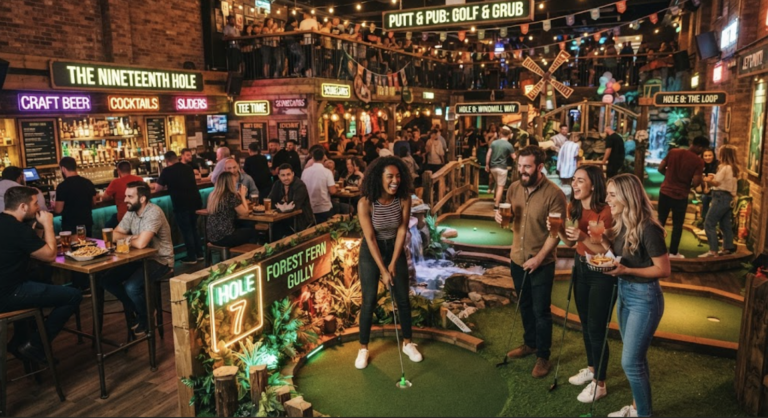
Competitive socializing has grown tremendously since the COVID-19 pandemic. During lockdowns and social distancing, people became especially eager to interact with friends and family. As people found themselves able to get back out in the world again, some dealt with increased insecurity about social interaction. After all, who wants to make endless small talk? Studies show that social insecurity heightened, particularly among women. Seeking a sense of structure, people found competitive socializing opportunities, like pickleball and tech-infused mini golf, to be a comfort and a way to get back out into the world.
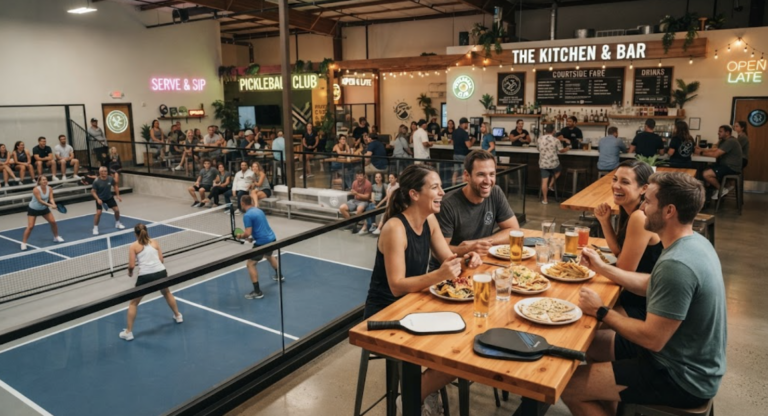
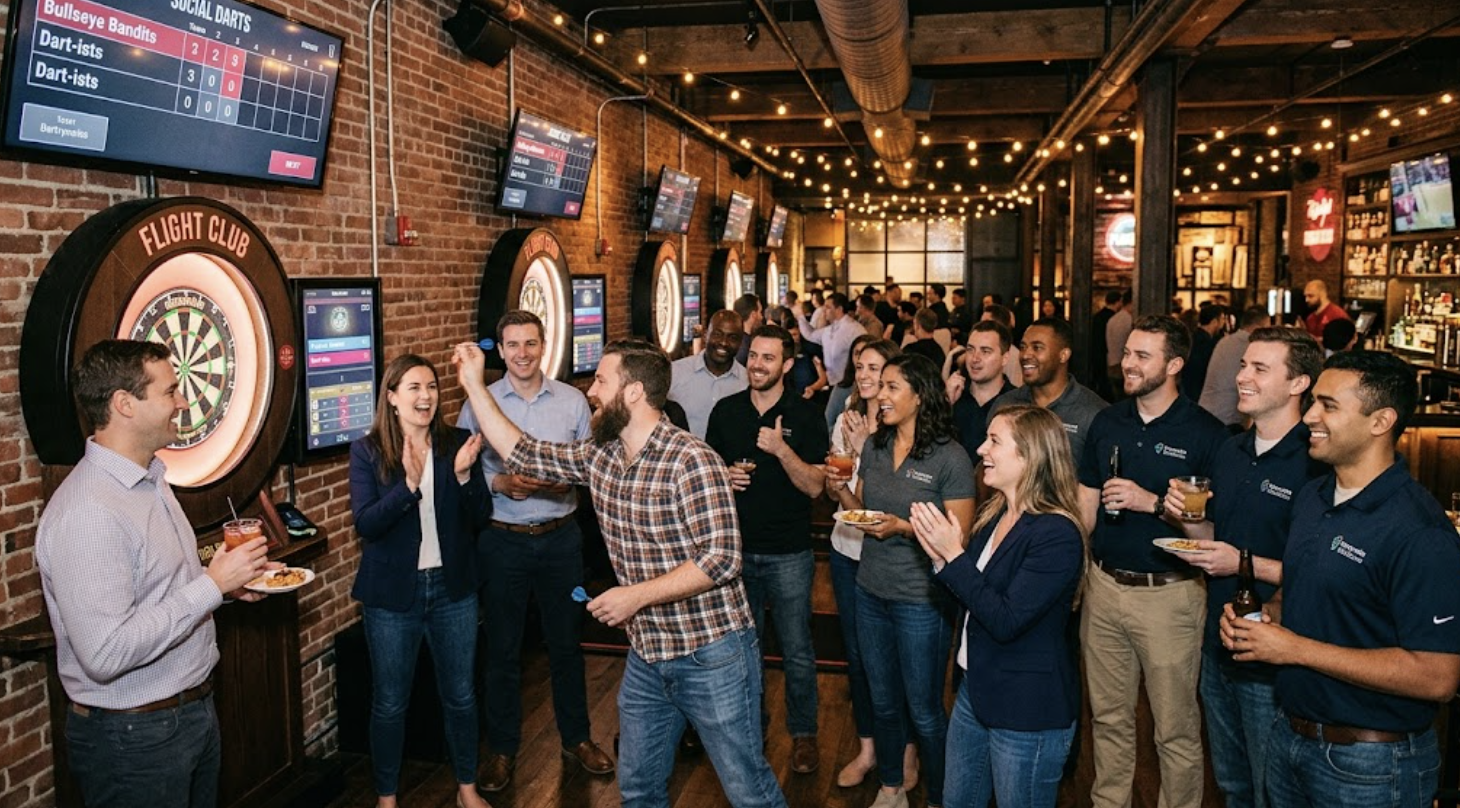
Traditional entertainment has often been passive: sit in a theater, watch a sporting event, listen to a concert, or have dinner. But competitive socializing takes a different approach. Instead, the customer is part spectator, part participant, and part competitor. The activity itself becomes the reason to visit, and often the centerpiece of a longer experience that includes food, drinks, music, technology, and social interaction. Consider Swingers, the popular mini-chain that combines “crazy golf,” Carnival games, and delicious food. A spin on the traditional miniature golf activity, the outrageous courses and sense of friendly competition allow attendees to actively participate rather than watching from the sidelines. Similarly, Bosse Pickledom, located in a former Neiman Marcus in the Natick Mall outside Boston, is a combination of state-of-the-art pickleball courts and courtside lounges. Welcoming regular members and private events for groups ranging from 10 to 3,000, the sprawling facility is as interactive as it gets. Another popular option is Flight Club, an upscale entertainment concept combining elevated food and beverage menus with dynamic tech-enabled Social Darts®. With 11 existing venues in the United States and four more in the works, it says a lot about the growth potential and the commercial space that it will take to sustain these businesses.

A restaurant is no longer competing only with other restaurants. For a night out, it may be competing with a bar, a concert, an arcade, a fitness class, or an immersive entertainment venue. This means the experience itself becomes part of the product. In the eyes of the customer, things are shifting from “What can I consume?” to “What can I do?” Consider how 72% of Gen Z visit hospitality spaces on a weekly basis, with many choosing venues that offer shared experiences. 80% of Gen Z said they would be more likely to go to the pub if there was karaoke, themed events, games, or live music, according to CGA by NIQ’s PubTrack, a market research tool. As many populations are moderating their alcohol consumption, the desire for connection and experience doesn’t shrink. An interest in play creates an opportunity for venues that give people a reason to gather.
The return of play isn’t simply a cultural phenomenon. It’s becoming a real estate consideration. As Cushman & Wakefield noted, competitive socializing isn’t just a chance for people to get out of the house and have fun. It’s also an opportunity for landlords to revitalize their assets and fill large vacancies. However, when it comes to picking a location for a competitive socializing venue, there are a variety of important issues that need to be brought into the conversation. These range from access and parking to neighborhood context and corporate demand. Any business looking to expand needs the input of professionals who understand the experiential economy. The team at Generis Collective is ready to get them started.
News • Sep 01 2026
News • Aug 18 2026
Generis Collective can be your single point of contact for all your property development needs- providing leadership across every stage of your project and managing all moving parts. Let’s connect and start transforming your guest experience.