News • Sep 23 2026

news • Aug 18 2026
news • Aug 18 2026
It’s no secret that upper-floor retail is structurally harder to lease than ground-floor space.
On the ground floor, tenants value everything from visibility and signage to parking access and impulse foot traffic. After all, folks who stroll by are eager to pop into a welcoming store or venue that’s just a few steps away. In order to activate upper levels of a retail property, real estate developers are thinking outside of the box. From clubs and wellness centers to coworking spaces and immersive experiences, industry specialists are honing in on the types of properties that thrive on the second floor. In contrast to what many may assume, these types of venues have made second-floor spaces incredibly leasable. Below, we’ll take a look at three examples that demonstrate just how successful the second-floor strategy can be.
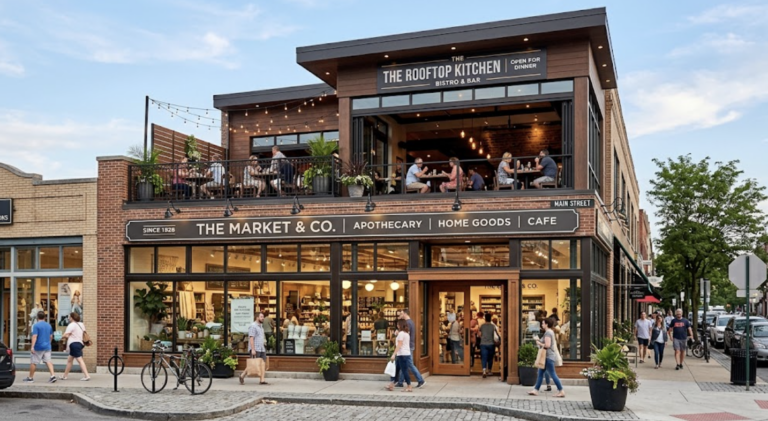
A restaurant isn’t an impulse purchase. Instead, it’s a destination that serves as a traffic-generating anchor rather than a secondary tenant. In a previous post, we examined how RH, which was previously known as Restoration Hardware, opened RH Paris last year. The venue became the most anticipated opening since the company began its expansion into Europe. While the retail venue is located on the ground floor, a jaw-dropping staircase lined with brass medallion balustrades leads to the upper-floor restaurants. On the rooftop, you’ll find Le Petit RH, the restaurant. They continued their success in Montreal to Oklahoma City, making great use of their upper floors. RH’s expansion into restaurants created an experiential venue on its upper floor that people visit on a deliberate trip.
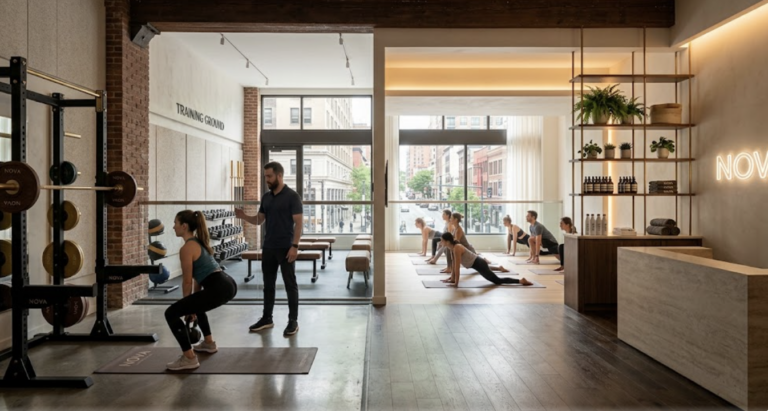
When combined with retail on the first floor, a second-floor fitness club turns retail into a destination. Fitness has become one of the biggest absorbers of otherwise difficult retail space nationally. In fact, service-based tenants actually leased more retail space than goods-based tenants for the first time in 2025, CoStar noted. Boutique fitness, Pilates, yoga, martial arts, personal training, climbing, and similar uses are actively taking upper-level space and give people a reason to consciously spend with a specific brand. Customers have a compelling reason to head upstairs and continue to make regular visits.
The second-floor fitness club works at a variety of price points. At the Connecticut Post Mall, you’ll find LA Fitness occupying roughly 39,500 square feet on the second level. Meanwhile, in Boston’s coveted Seaport neighborhood, an Equinox location boasts stunning views of Rowes Wharf and Boston Harbor and invites guests to head upstairs to experience everything from The Spa at Equinox to an entire strength floor. Seeing as a recent report by industry firm Les Mills found that “experience and ambiance” are core drivers of attendance for younger fitness enthusiasts, developers are paying particularly close attention to Millennials and Gen-Zers who are willing to invest significant money in their wellness pursuits.
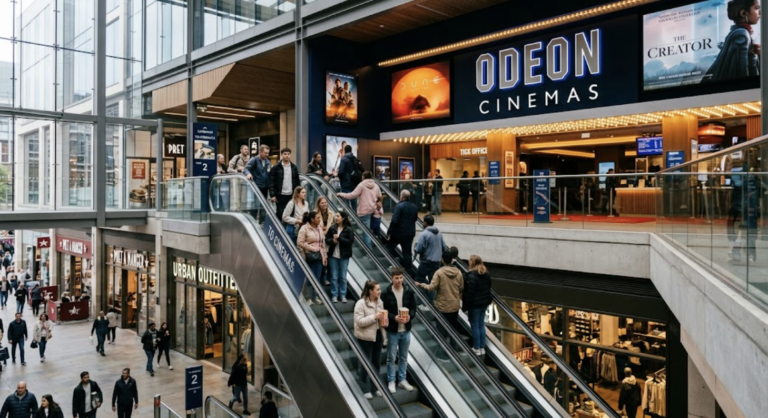
Entertainment creates a destination. When a venue offers an immersive experience, it gives people a reason to visit a development beyond shopping. They generate substantial foot traffic and revenue without requiring the prime, street-level retail frontage.
There are also significant physical implications that developers should consider that make second floors particularly good fits for entertainment venues. These types of destinations, which include everything from bowling alleys and movie theaters to comedy clubs and arcades, frequently need wide, flexible spaces with fewer columns and higher ceilings. Second-floor commercial space can accommodate these layouts while allowing smaller retail bays at ground level. Entertainment venues also activate spaces beyond the traditional shopping hours. They keep a steady flow of customers at times when typical ground-floor venues, like cafes and shops, are quieter.
In Boston, the Alamo Drafthouse in the Seaport features 10 auditoriums and 782 seats. But it’s not just your typical movie theater. While it has all the offerings of a typical movie venue, there’s also a bar, The Press Room, with 30 beers on tap. But it’s the special events that bring customers back repeatedly, like interactive viewing parties for special movies. When The Devil Wears Prada 2 was released, fans dressed to the nines for viewing events featuring themed props, games, and audience participation. This created a one-of-a-kind moviegoing experience. When an experience offers customers a reason to make their venue a destination, a second floor can thrive.
At the moment, retail availability is low. CBRE reports U.S. retail availability at just 4.9% in Q2 2026, with positive net absorption for four consecutive quarters. Therefore, the issue isn’t that tenants have disappeared. Instead, tenant demand is concentrating into particular categories and formats. When developers implement a smart second-floor strategy, a compelling venue can make a development feel like a place to spend several hours rather than simply a collection of stores. From rooftop restaurants and fitness clubs to full-blown entertainment venues, the second floor can become every bit the destination as the ground floor. However, it requires a sharp combination of strategic and creative thinking to bring this to fruition.
News • Sep 23 2026
News • Sep 01 2026
Generis Collective can be your single point of contact for all your property development needs- providing leadership across every stage of your project and managing all moving parts. Let’s connect and start transforming your guest experience.