News • Mar 04 2026
news • Mar 19 2026
news • Mar 19 2026
We’re all born with a desire to belong. From the moment we step into an unfamiliar environment to the second we sit down for a cup of coffee in the break room at work, we’re all eager to experience spaces that respect, empower and celebrate us as individuals, be it for our age, our physical makeup, socioeconomic status, or our backgrounds. We all want to feel comfortable and accepted. Designing with dignity and the challenge for Universal Design helps create this opportunity.
Universal Design goes much further than meeting regulatory standards, codes or ADA guidelines and creates spaces focused on the human experience, rather than just an aesthetic goal. But it doesn’t ignore the need for beautiful surroundings, either. Instead, designing with dignity insists that every person deserves to live, work, and exist in environments that are safe, healthy, intuitive and aesthetically pleasing.
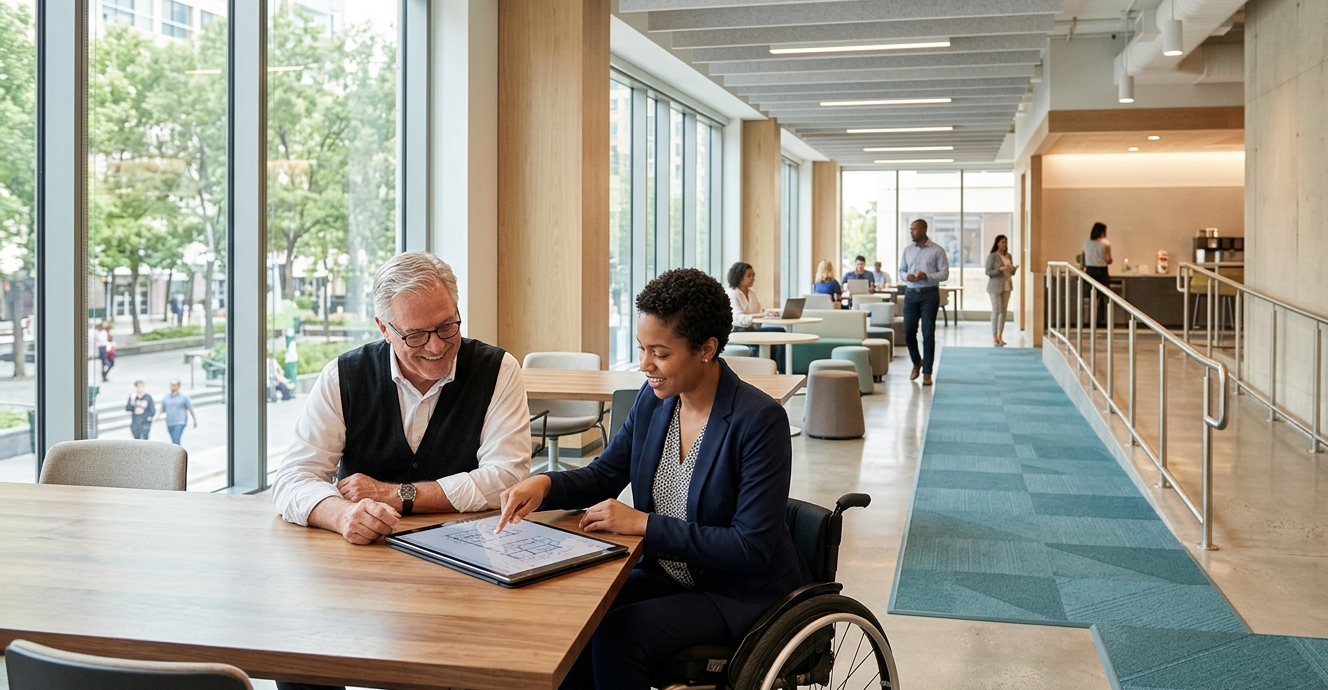
Many design firms, developers, and architects challenge themselves to think beyond the technical requirements and actively create spaces that focus on inclusion and equity for all users – a seamless experience for everyone. Be it tactile and intuitive paths for the hearing and visually impaired, to step-free access or spaces equally inviting to both the young and the old. In this post, we’re going to explore the concepts that they put into practice to create the environments we know and love.
Across the world, architects and real estate developers are putting the principles of design for dignity into practice. This is visible in spaces ranging from office spaces to social service centers. Virgin Media O2, the recently merged media and telecommunications company based in the U.K., just opened a new headquarters in London, and features furniture that fits people of all shapes and sizes, workspaces near windows for light to boost wellness, and meeting spaces that are wheelchair accessible. As almost eight out of 10 employees say they want to work for an employer who cares about inclusivity, according to a survey by CNBC, it’s clear that design for dignity is in demand.
The concept of trauma-informed design is also a concept of design for dignity. A feature in Texas Monthly explores a San Antonio organization called Haven for Hope that serves as an innovative one-stop resource center that combines shelter dwellings and social services offices to improve access and efficiency. Since many of the clients they assist have dealt with significant trauma, they focus on using light or color to create a soothing ambience or having a courtyard that doubles as a green space and a protected respite for those who aren’t yet comfortable sleeping indoors.
“The physical space is extremely important, especially if somebody has dealt with trauma,” said Mark Carmona, the former president and CEO of Haven for Hope. “It’s not just about how we respond and approach an issue, but about what the environment looks like. Is it inviting? Do you feel like you’re in a safe space where you can talk to people?”
There are several different facets that design professionals are exploring when it comes to Universal Design. One of the most interesting components is focusing on the materials with which they’re building. Generally, design for dignity focuses on ethically sourced materials that are high quality.
Developers must work with the existing communities where they’re developing properties, rather than creating an “us vs. them” mentality that emphasizes displacement and gentrification. By becoming part of the neighborhood rather than a threat to those who live there, their presence will be a respected one. Actively engaging with the neighborhood and speaking with residents and community leaders creates a positive environment.
In a busy and stressful world, there are plenty of unhealthy things that often preoccupy our minds. That’s why people find tremendous value in having the environment they spend significant time in, reflecting care and thoughtfulness. Whether it’s their workplace or their doctor’s office, the psychological impact of their environment needs to be taken into consideration.
Equally important is the need to create inclusive environments accessible to all. The days of simply designing, building and checking the boxes are long gone. If architects and developers want to create successful businesses hand-in-hand with successful spaces, they need to actively consider the ethical and societal implications of their work. As design for dignity becomes the new normal, now is the time to embrace the mindset of Universal Design.
News • Mar 04 2026
News • Feb 20 2026
Generis Collective can be your single point of contact for all your property development needs- providing leadership across every stage of your project and managing all moving parts. Let’s connect and start transforming your guest experience.